
titanium plate
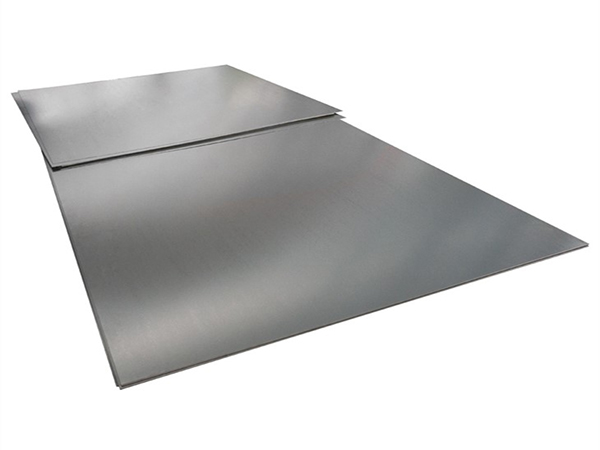
Definition and Composition of Titanium Alloy1. Basic elements and alloy elementsTitanium alloy is based on titanium as the basic element, with the addition of alloying elements such as aluminum, vanad...
Product Details
Definition and Composition of Titanium Alloy
1. Basic elements and alloy elements
Titanium alloy is based on titanium as the basic element, with the addition of alloying elements such as aluminum, vanadium, molybdenum, and zirconium. Aluminum can enhance the strength and oxidation resistance of alloys, while elements such as vanadium, molybdenum, and zirconium can improve the toughness and corrosion resistance of alloys, giving titanium alloys various excellent properties.
2. Form of titanium alloy sheet
Titanium alloy sheet is a plate-shaped material processed by rolling, with a thickness range of 0.3~50mm. Thin plates (0.3-5mm) are commonly used for components that require high surface accuracy, while thick plates (greater than 5mm) are used for structural components that can withstand large loads.
3. Wide applicability in various fields
Titanium alloy sheet is widely used in aerospace, chemical, shipbuilding and other industrial fields due to its high strength, corrosion resistance, light weight and other characteristics. It is an indispensable key material in modern industry.
High strength and low density
1. Density and specific strength advantages
The density of titanium alloy is about 4.5g/cm ³, which is only 60% of that of steel. Its specific strength (strength/density) ranks among the top in metal materials. For example, in the aerospace field, the use of titanium alloy sheets can significantly reduce the weight of aircraft while ensuring structural strength and reducing energy consumption.
2. Application in the field of weight loss demand
In automobile manufacturing, using titanium alloy sheets to manufacture body parts can reduce vehicle weight by about 30%, improve fuel efficiency, reduce exhaust emissions, and conform to the development trend of environmental protection and energy conservation.
3. Comparison with traditional materials
Compared with aluminum alloy, titanium alloy has more advantages in high-strength demand scenarios. In the manufacturing of pressure resistant shells for deep-sea submersibles, titanium alloys can withstand enormous water pressure while maintaining low self weight, while aluminum alloys are difficult to meet the requirements.
Good corrosion resistance
1. Corrosion resistance in different environments
Titanium alloys exhibit excellent corrosion resistance in harsh environments such as seawater, chloride ions, and acidity, surpassing stainless steel. For example, in ocean engineering, seawater desalination equipment pipes made of titanium alloy can have a service life of over 20 years, while ordinary stainless steel pipes can only be used for 5-8 years.
2. Application in the field of chemical engineering
In the chemical industry, titanium alloy sheets can be used to manufacture equipment such as reaction vessels and towers, which can effectively resist the corrosion of chemical media such as strong acids and alkalis, reduce equipment maintenance and replacement costs, and improve production efficiency.
3. Examples of Ocean Engineering
A certain offshore oil platform uses titanium alloy plates as pipeline materials. After years of immersion in seawater and attachment by marine organisms, there is no obvious corrosion on the surface of the pipeline, ensuring the safety and stability of oil and gas transportation.
High/low temperature resistance performance
1. High temperature performance
Some titanium alloys such as TA7 can work for a long time at 500 ℃, with good oxidation resistance and high strength and stability even in high temperature environments. For example, in the manufacturing of high-temperature components for aircraft engines, TA7 titanium alloy can withstand the erosion of high-temperature gas, ensuring the normal operation of the engine.
2. Low temperature performance advantages
At low temperatures, titanium alloys can still maintain good toughness, and their impact toughness will not significantly decrease in liquid nitrogen (-196 ℃) environment. This makes titanium alloy sheets suitable for manufacturing low-temperature storage tanks, spacecraft low-temperature components, etc., ensuring safety under extreme low-temperature conditions.
3. Comparison of High and Low Temperature Applications
Compared with ordinary steel, titanium alloy has significant advantages in both high and low temperature environments. Ordinary steel rapidly decreases in strength at high temperatures and becomes brittle at low temperatures, while titanium alloys can maintain excellent performance over a wide temperature range and have a wider range of applications.
biocompatibility
1. Non toxic and anti rejection properties
Titanium alloy is non-toxic, anti rejection, and will not cause immune reactions after implantation in the human body. For example, in orthopedic implants such as bone plates, joints, etc., titanium alloy materials have good compatibility with human tissues, which can promote bone tissue growth and improve the success rate of implantation.
2. Medical and health field
In the field of dentistry, titanium alloy implants can form a good osseointegration with alveolar bone, have a long service life, and high aesthetic appeal. According to statistics, the success rate of titanium alloy dental implants can reach over 95%, far higher than other materials.
3. Interaction with human tissues
The surface of titanium alloy can be treated with a bioactive coating to further enhance its adhesion with human tissue. For example, after artificial hip joint implantation, the coating on the surface of titanium alloy can promote bone cell adhesion and growth, accelerating the rehabilitation process.
Typical grades and applications
1 TA1/TA2
TA1/TA2 is high-purity industrial pure titanium with good corrosion resistance and processability. In the field of chemical engineering, it is used to manufacture heat exchangers that can effectively resist corrosion from chemical media; In seawater desalination equipment, it can withstand the erosion of seawater for a long time to ensure stable operation of the equipment.
2 TC4(Gr5)
TC4 (Gr5) is one of the most widely used titanium alloys, with high strength, good toughness, and strong corrosion resistance. In the aerospace field, it is used to manufacture aircraft structural components such as wings, fuselage frames, etc., which can reduce aircraft weight and improve fuel efficiency; In the medical field, it is used to manufacture artificial joints with good compatibility with human tissues and long service life.
3 Ti-6242(Ti-6Al-2Sn-4Zr-2Mo)
Ti-6242 (Ti-6Al-2Sn-4Zr-2Mo) is mainly used for compressor blades in aircraft engines. Its high strength, high toughness, high temperature resistance and other characteristics can withstand the impact of high-speed airflow and high temperature environment, ensuring the efficient operation of the engine and improving the performance and reliability of aviation engines.
Rolling processing
1. Hot rolling process
Hot rolling is carried out above the recrystallization temperature of titanium alloys and is suitable for the production of medium thick plates (thickness>5mm). Hot rolling can improve the internal structure and mechanical properties of titanium alloy sheets, and enhance their plasticity and toughness.
2. Cold rolling process
Cold rolling is carried out at room temperature and is mainly used for producing thin plates (0.3-5mm), which can achieve higher surface and dimensional accuracy. The cold-rolled titanium alloy sheet has a smooth surface and uniform thickness, making it suitable for components with high surface quality requirements.
3. Comparison of Rolling Processes
Hot rolling and cold rolling each have their own advantages and disadvantages. Hot rolling has high production efficiency, but relatively poor surface quality; Cold rolling has good surface quality, but the production cost is relatively high. In actual production, suitable rolling processes can be selected according to product requirements.
Surface Treatment
1. Acid washing treatment
Acid washing is the process of removing oxide scales from the surface of titanium alloy plates using a mixture of hydrofluoric acid and nitric acid. After acid washing treatment, the surface of the board is cleaned, which can improve subsequent processing and performance, such as welding, painting, etc.
2. Sandblasting and polishing
Sandblasting can remove impurities and defects on the surface of titanium alloy plates, making the surface roughness uniform. Polishing can make the surface of the board shiny like a mirror, improve surface aesthetics and corrosion resistance, and is commonly used in products that require extremely high surface quality.
3. Anodizing treatment
Anodizing treatment can form a dense oxide film on the surface of titanium alloy, improving its corrosion resistance and wear resistance.